In Traditional Chinese Medicine, the heart is the organ most closely linked to emotion. Think about all the terms we use every day to describe our state of mind: “heartsick,” “heartbroken,” “heartache” The heart is not the director of subtlety; the emotions it encompasses seem to always be on the far end of the spectrum, either extreme sadness or extreme joy. continue reading »
A Quick Peek of some Basic Dietary Practices for Eating Well and Feeling Good!
16 TRADITIONAL CHINESE MEDICINE HEALTH RULES
These healthy rules apply to children as well as adults, and they are meant to be followed for a healthy lifestyle.
Follow the 80/20 rule!
Fill your plate with 80% dark leafy greens and vegetables, 20% proteins and good fats.
1. Stop eating when you’re 80% full.
2. Eat 3 regular meals each day; develop a routine with 25% food intake at breakfast, 50% at lunch, and 25% at dinner.
3. Take time out for relaxation. Enjoy meals in a calm state, don’t eat standing up or while working or reading.
4. Chew food thoroughly, eat slowly, it takes 20 min. for your stomach to know it’s full.
5. Most meals should provide a balance of 5 flavors (bitter, sweet-bland, spicy, salty, and sour), natures (warming, cooling, cold, or hot), plus have the array of five colors (red, green, orange-yellow, purple-dark, white-tan).
Be sure to vary your types of foods. You don’t have to have all food groups, flavors, and colors in one meal, but if you consume 20% from each type of flavor, and color throughout the day you will obtain the most nutrition without eating too much of any one kind.
6. Most meals should be warm. Meals should leave you feeling satisfied but not full. 80% cooked, 20% raw for those with healthy digestive function. For those with poor digestion, keep cold and raw foods to about 5 %.
7. Eat 3:1 ratio of alkalizing foods to acidic forming foods. Coffee, black tea, sugar, meats, milk, and grains are considered concentrated foods, and are acidic forming. Counteract by eating alkalizing foods such as vegetables and dark leafy greens.
8. Regular sleep patterns; go to bed and wake at the same times every day.
9. Don’t eat three hours prior to bedtime.
10. Regular exercise, at least 3-5 times per week. Use a pedometer to record at least 10,000 steps per day equal to 5 miles.
11. Crowd out eating processed refined sugars, high fructose corn syrup, Agave, polyunsaturated vegetable oils, canola oil, safflower oil, cotton seed oil, & grains such as white flour and most white rice products.
12. Eat only organic Non-GMO foods. Consume Non-GMO organic soy only in traditional Asian forms of Tofu, Miso, Tempeh, Natto, or Tamari.
13. Drink plenty of fresh water per day. Add lemon juice or a few drops of lemon essential oil for alkalinity, and increased glutathione levels (antioxidant) to aid in natural cleansing and detoxification, and digestive support. Do not drink large amounts of liquid with meals. Not only does liquid dilute stomach acid and make it harder for your stomach to break down food, it also overwhelms the spleen Qi. It is best to drink a small cup of warm tea, miso soup, or broth with meals than cold iced water.
14. Enjoy the sunshine 2-3 X per week; depending on your skin type, weather, etc. or until your skin turn’s lightly pink; don’t burn! This is important for natural vitamin D formation that just can’t be beat by vitamins.
15. Reduce stress, find ways to help you deal with stress more effectively, like mediation, Tai Chi, Qi Gong, Yoga, Acupuncture, massage therapy, walking, or other fun hobby.
16. Have regular acupuncture treatments to keep your Qi-energy and Blood flowing smoothly. Chinese Medicine Proverb:
-When there is free flow, there is no pain
-When there is pain, there is no free flow
When in good health, have acupuncture once every 4-6 weeks. You will need more acupuncture when your body is imbalanced. Your acupuncturist will determine your treatment plan, and frequency when you have a health concern.
Acupuncture is the stimulation of acupuncture points on the skin that promotes a healing response, and makes you feel good. Acupuncture can be done without acupuncture needles! So please don’t let the thought of needles keep you from feeling good!
Methods we use to bring your body back into balance are, acupuncture needles, Moxa (moxibustion-burning of an herb called Mugwort over the acupuncture point that creates heat, smoke, and aroma), electro-acupuncture, non-needle microcurrent-electroacupuncture, essential oils, Gua Sha (skin scraping), cupping, plum-blossom, and other pressing tools.
At this point, I would suggest setting up at least a 10-minute consultation with an acupuncturist. This can be done over the phone or in person. If you are concerned about needles, ask about what other methods they use besides needles. He or she can explain each more in depth, and whether you’d be a good candidate for one or all the methods mentioned.
You can visit my web site or Facebook page to learn more about acupuncture and other non-needle methods at www.wellwithdrmichele.com or www.facebook.com/wellwithdrmichele
PS: Sorry, as an acupuncturist I just couldn’t help myself, I feel an obligation to promote my profession!
Posted in Chinese Medicine | Comments Off on Eating Well and Feeling Good
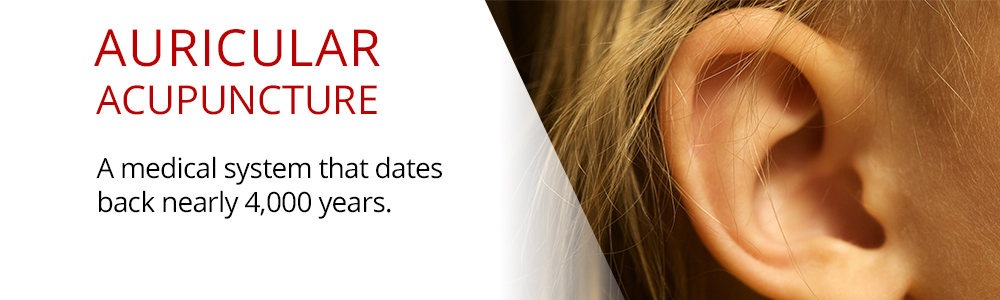
Traditional Chinese Medicine is a medical system that dates back nearly 4,000 years. Auricular acupuncture was first mentioned around 500 B.C. in the Yellow Emperor’s Classic of Internal Medicine, which is the equivalent of the Bible for TCM practitioners. However, the method in which auricular acupuncture is practiced today is actually based upon discoveries that occurred in France in the 1950s. Modern auricular acupuncture is based upon the work done by Dr. Paul Nogier of France.
Auricular acupuncture is the stimulation of the external ear for the diagnosis and treatment of health conditions. These health conditions may be taking place anywhere throughout the body. The stimulation of these acupuncture points can be done manually, with an acupuncture needle, a laser, magnets or ear seeds. Regardless of the means of stimulation, auricular acupuncture can be a very powerful addition to regular acupuncture treatments.
The current form of auricular acupuncture came about after Dr. Nogier noticed a scar on the upper ear of some of his patients. When he inquired about the scar, he found out a local practitioner had been treating his patients for sciatica pain and she was cauterizing this specific area on the external ear to relieve their low back pain. Dr. Nogier conducted similar tests on his own patients and found their low back pain was also relieved. He tried using other means of stimulation as well, such as acupuncture needles and found it to be just as effective as cauterizing the area. So Dr. Nogier theorized if an area of the upper external ear is effective on treating low back pain, then perhaps other areas of the ear could treat other parts of the body. This led to the model now used when teaching auricular acupuncture. The ear is thought to represent the whole anatomical body. However, it is upside down in orientation, so the head is represented by the lower ear lobe, the feet are at the top of the ear and the rest of the body is in between. According to history, the Chinese actually adopted this model of auricular acupuncture in 1958.
Auricular acupuncture is considered a microsystem, in that the ear is like a microcosm of the whole body, meaning one part of the body, the ear in this instance, represents the whole body. Microsystems also appear on foot and hand reflexology, facial acupuncture and scalp acupuncture.
This system has been practiced in Asia, albeit in a different form, for over 2,000 years. Auricular acupuncture has been used in Europe for the past 40 to 50 years. And it is finally starting to take root in the United States. The U.S. military, over the past 5 to 10 years, has started utilizing auricular acupuncture for its battlefield personnel. This form of battlefield acupuncture is used to help soldiers deal with PTSD (post-traumatic stress disorder) brought on by being in combat.
Since auricular acupuncture allows for every part of the external ear to connect through the microsystem to every part of the body, many conditions can be treated using only a few very tiny needles. Not only can PTSD be treated using auricular acupuncture, but also things like chronic pain, drug addiction, high blood pressure and nausea. And for those who are a little needle-shy, auricular acupuncture is a great way to treat them because they will never see the needles and they will still get the help they need to achieving health and wellness.
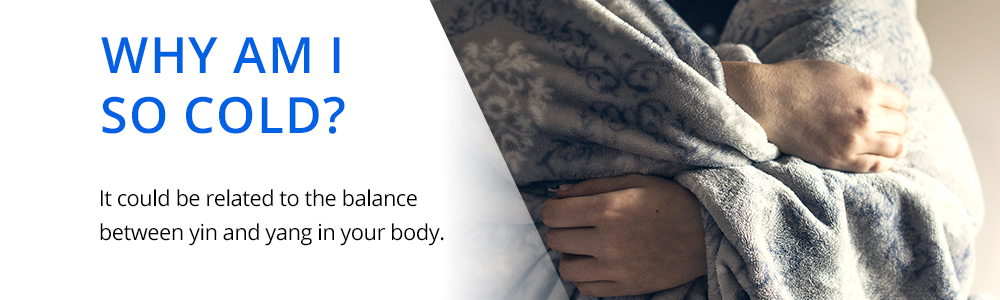
Everyone feels cold sometimes, but some people are perpetually chilled to a point where it interferes with their lives.
From a Traditional Chinese Medicine perspective, there are two different kinds of cold in the body: full cold and empty cold. Full cold refers to a condition where there is an excess of cold-type energy in the body leading to a feeling of cold, and most likely other health problems, as well. The other kind of cold is empty cold. This means there is not an abundance of cold energy but rather a weakness of the warm fiery energy. When there isn’t enough warmth in the body, you will feel cold – not because the cold is so strong, but because you don’t have enough fire to balance it out.
Full cold
As mentioned, a full cold condition refers to an over-abundance of cold type energy in the body. This is often an acute case and may relate to being outside on cold weather, or exposing a certain area of your body to cold water, cold wind or cold weather. Symptoms really depend on the location of the cold in the body.
For instance, you might feel really cold when you are coming down with a cold virus. From a TCM perspective, this is cold being trapped under the skin or in certain channels on the back of the neck. Other associated symptoms may be a stiff neck, a runny nose or an occipital headache.
Full cold can also lodge itself in the digestive system – this may happen following a meal of cold food, drinking cold beverages in a cold environment or following exposure to very cold temperatures. Full cold in the digestive system can lead to a feeling of cold, as well as painful cramping, diarrhea or loose stools and pain in the abdomen.
Another common site of a full-cold condition is the uterus. This can be from exposure to cold temperatures such as swimming in cold water or sitting on a cold surface. Certain gynecological procedures can also introduce cold into the uterus. This type of cold manifests as a feeling of cold, particularly with the period and very painful cramping before and during the period. There will likely also be clots and possible problems with fertility.
All of these full-cold conditions can be avoided by limiting exposure to cold environments and cold foods. Also introducing heat internally through teas, soups and warming herbs can help.
Empty cold
In TCM, health is a state of balance between yin and yang. Yin refers to the cool, watery, passive parts of our physiology, whereas yang refers to the hot, fiery, active parts. When the yang energy is weakened, there isn’t enough fire to balance out the cool and watery yin. This leads to a pervasive feeling of cold that is hard to shake, even with lots of blankets and warm drinks. This is someone who always feels chilled, no matter what. There may be other symptoms, as well, such as loose stools, a lack of energy or motivation, wanting to sleep all the time or fluid accumulation. Yang deficiency cold often requires use of herbal medicine, acupuncture, and moxa to treat appropriately.
While these are the main reasons for feeling cold, there are two other energetic imbalances that can also lead to feeling cold –Qi stagnation and blood deficiency.When Qi is stuck, circulation is impaired and heat can’t get to our extremities effectively. This kind of cold often manifests as very cold hands and feet. It can be helped by regular exercise, reducing stress and limiting heavy foods. A weakness in the blood energy of the body leads to a low-grade constant feeling of cold less severe than a yang deficiency cold, but still pervasive and consistent. It can be helped with getting enough sleep, reducing stressors and eating a well-balanced diet of blood-nourishing foods.
• Delicious Recipes Using Spring Fruits and Vegetables •
Hours
Monday
8:30am - 4:30pm
Tuesday
8:30am-4:30pm
Wednesday
8:30am-4:30pm
Thursday
8:30am-4:30pm
Testimonials
“Dr Michele knows how to diagnose and heal you. She has a variety of methods she can utilize to work with your mind and body to produce the healthiest you!”
~ Carol Prokop. Also posted on Google Reviews!
I needed relief from chronic pain in my back, hips, and sciatic nerve. I have had these problems for a number of years. My doctors used physical therapy, and pain medication. I can no longer take anti-inflammatory medication. My acupuncture treatments have helped a lot. I can now relax, and I feel almost pain free. It has helped my attitude also. My activities have improved. Michele is a wonderful person, caring, compassionate, and an excellent acupuncture therapist!
C.T.
After two back surgeries, I was still having a great deal of pain. A friend told me acupuncture helped him with shoulder pain. I was a little skeptical but decided to give it a try. I didn’t want to stay on Percocet pain killers forever. After receiving acupuncture treatments, I was amazed how it helped with the pain. It isn’t gone but it is at least bearable. I only occasionally need to take a pain killer, and that is when
A letter as copied to her doctor: Ms. Michele Arnold has been working with me since I begun experiencing hot flashes and has been able to manage them for me. I know it works because I took a five week hiatus from acupuncture treatments and experienced hot flashes so severe that I actually did not want to live. With four treatments I was back to feeling great with only a very occasional minimal hot flash. Acupuncture is relaxing and uplifting.
Acupuncture has helped relieve so many symptoms, its hard to list them all. I have MS (multiple sclerosis) and acupuncture has helped with my vision, balance, and overall energy level. It also completely addressed the pain from a torn shoulder rotator cuff. Thank you Michele!

 In Traditional Chinese Medicine, the heart is the organ most closely linked to emotion. Think about all the terms we use every day to describe our state of mind: “heartsick,” “heartbroken,” “heartache” The heart is not the director of subtlety; the emotions it encompasses seem to always be on the far end of the spectrum, either extreme sadness or extreme joy. continue reading